Showing posts with label cosmetics labeling. Show all posts

Friday, September 12, 2014

FYI: Talcum Powder and Cancer

As you may know by now, I'm a lawyer by day and budding beauty blogger by night.  I was genuinely surprised when I realized the two seemingly unrelated activities intersect frequently - but rarely in a good way.  As a beauty blogger, I like to be aware of what sort of ingredients are in the cosmetics I purchase and review.  As a lawyer, I receive information on said ingredients when there's a problem with them.  Enter the talcum powder lawsuits.  Back in 2009, a study by Dr. Margaret Gates and the National Cancer Institute and National Institute of Health led to the first of many lawsuits regarding the link between talcum powder and ovarian cancer.  These lawsuits are still ongoing nationwide.  So, what do you need to know about this common ingredient?  Here's the deal.

What is talc?

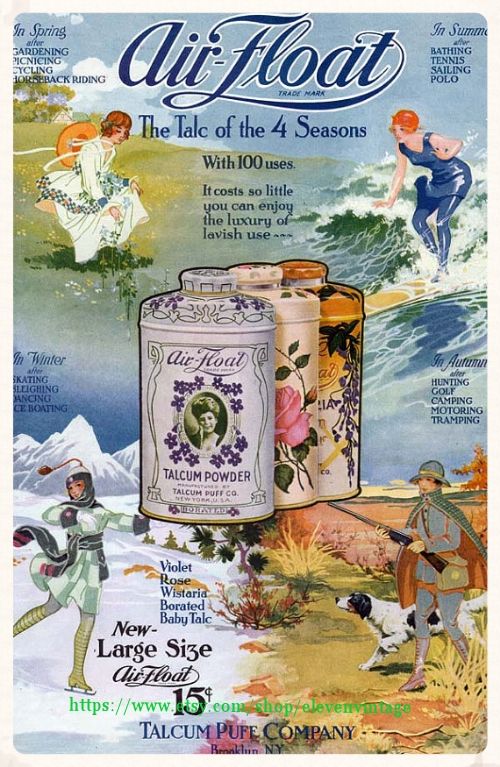
Talc is a mineral that absorbs moisture and protects skin from friction.  As you can see from the advertisement above, women have been using talc in the form of talcum powder for years.  However, talcum powder is mostly commonly referred to today as "baby powder."  Prior to the 1970's, naturally occurring talc, ground into powder form, contained asbestos.  Although asbestos is banned these days, in a 2013 lawsuit, it was alleged that studies showed that even asbestos-free talcum powder had the potential to cause ovarian cancer.


Where is talc?

Most dusting powders for adults or baby powders for infants contain talcum powder as the main (sometimes only) ingredient.  Talc is also a filler in certain eye shadows, face powders, foundations, blush and bronzers, etc.  You should check any powder based cosmetics ingredients list to see if talc is included.


Is talc really a threat?

The American Cancer Society summed up some of the research that has been going on in relation to the link between cancer and talcum powder.  So far the research has been focused on use of talcum powder in the genital area and the findings are mixed.  Some research suggested an increased risk to women of as much as 30%, and the International Agency for Research on Cancer, which is part of the World Health Organization, has declared asbestos-free talc to be "possibly carcinogenic" to humans.

How to avoid talc?

I'm no scientist and I don't intend to dictate whether or not people should avoid talcum powder entirely, but it is worth further research and consideration by we the consumers.  If, like me, you prefer to err on the side of caution, check the ingredients in any and all cosmetics you purchase.  If the ingredients aren't listed on the packaging, you may be able to find that information online on the manufacturer's website(s).  Just because a product is cruelty-free does not mean it is talc-free.  Luckily, due to the attention talc is getting these days, many makeup companies proudly declare if/when their products are talc-free.

At the end of the day it is up to the savvy consumer to do his or her homework before making a purchase.  The research on talc is still in its infancy but it is my personal belief that it is an unnecessary "filler" and there are many wonderful brands that don't use it.  Hopefully you find this information useful and it leads you to further research.

Friday, June 20, 2014

FYI: 5 Common Animal By-Products You Didn't Know Were There

So, you're doing your part and checking your companies out to be sure you're buying cruelty-free products.  Hooray!  However, as you may have read (see my earlier post on cosmetics labeling issues) "cruelty-free" is not as all-inclusive as it seems.  Another concern plagues the cruelty-free beauty lover: hidden animal by-products.  Although listed in the ingredients, most of us don't know exactly what we're looking at.  We can't pronounce it, we've never heard of it, we don't know where it comes from - it seems quite daunting, then, to weed out what we don't want to put on our shopping lists.

This list is far from exhaustive, but should help get you familiar with common ingredients you may be staring down the next time you're reading your labels.  Oh, and speaking of labels, "naturally sourced" is another term you should become familiar with.  As with many other phrases that lack any legally enforced definition, be advised that "naturally sourced" ingredients does not mean plant derived or plant based. 

Carmine

What it is:  In a nut-shell, ground up insect bodies.  Carmine creates a red coloring and is used as a dye.  To create carmine, insect bodies are ground up and boiled to extract the carminic acid and various further chemical processes create color variations.

How to spot it:  Look for ingredients that read "crimson lake," "cochineal," or "natural red 4."

How to avoid it:  Back in 2006, the FDA considered requiring products that contained carmine to call it just that: carmine.  They were also considering requiring manufacturers to list that the product was insect-based.  Needless to say, that did not go over well and the FDA ultimately bailed on the potential requirement.  However, if you see "cochineal extract" or "carmine" listed, consider this code for insect-based.

Shellac

What it is:  More bugs!  It is actually an excretion of the female laccifer lacer bug and comes in various colors.  It is used in cosmetics and hair products to provide shine, such as in hair spray or nail polish.  If you're concerned about the environmental impact, The Vegetarian Resource Group estimates that 300,000 lac bugs are killed in the production of just 2.2 pounds worth of lac resin. 

How to spot it:  Look for additive number "E904," "resinous glaze," and "confectioner's glaze" (in food).

How to avoid it:  The ingredient "Zein" is a corn based alternative to shellac.  If you find shiny products like lipsticks, glosses, etc., check to see if the product is vegan (no animal by-product use) or see if the shine is derived from another source, such as "Zein."

Lanolin

What it is:  The word "lanolin" is actually from the Latin word "lāna" which means "wool" - "oleum" means "oily birth."  Put that all together and you get an oily substance secreted by the oil glands of sheep.  Although sheep are not usually killed to obtain the product, improper shearing of sheep has been the cause of death, disfigurement, pain and trauma in these animals.

How to spot it:  Lanolin is often listed as is: lanolin or lanolin oil.  However, look for "lanosterols," "triterpene," "lanogene," or "laneth."

How to avoid it:  Any time you see "sterols" listed, be wary of lanolin.  If the ingredients state "plant sterols" it is a good indication that the oily substance is coming from plants.  Since lanolin is generally used as an emollient, look for plant based oils like coconut oil and olive oil instead.

Guanine

What it is:  Used to create a shimmery effect, guanine is extracted from fish scales and is most commonly found in nail polish.  It's also used in eye shadows and skin care creams and serums. 

How to spot it:  Guanine, like lanolin, is labeled as is.  You may also see "hypoxanthine" or "2-aminohypoxanthine."

How to avoid it:  "Mica" is a common mineral used to create that glittery effect we all know and love.  "Bismuth" and "sericite" are other alternatives to look for when you see something shiny.  If you have a sensitivity to mica, seek out "titanium dioxide" or "zinc oxide" which are common substitutes.  Mica treated with "methicone" is another great way to avoid mica sensitivity AND guanine - win, win.

Apitoxin

What it is:  Ever been stung by a bee?  Then you have experienced the irritation and inflammation associated with apitoxin, or bee venom.  It is believed that apitoxin increases blood flow and creates a plumping effect, so it is used in various skin care products and lip balms/glosses designed to plump lips/skin.  The biggest concern for cruelty-free beauty lovers is that, once a bee stings, it dies.  Recent findings suggest that bees are already in serious trouble as their numbers decline from pesticide usage and declining habitats. 

How to spot it:  If it is apitoxin you're looking to avoid, watch out for "melittin," "apamin," and "adolapin."

How to avoid it:  Fortunately (or perhaps unfortunately, depending on how you look at it) the makers of "bee venom" cosmetics and products are proudly touting the ingredient.  Alternatives are easy to find, mostly herbs and spices that produce that tingly heat sensation: peppermint, cinnamon and menthol are all readily available.
Friday, June 6, 2014

FYI: Cruelty-Free and Legalese


Cruelty-free beauty is not a new concept.  Most of you already have seen the horrific images of rabbits with oozing sores, or rats that have been blinded with chemicals.  But what's the real deal with cruelty-free products?  First, some truth about labeling and what truly constitutes "cruelty-free":


Cruelty-Free - What It Is and Isn't:

The beauty industry cannot really decide what constitutes a truly cruelty-free product.  However, organizations such as PETA, the Humane Society of the United States and the Leaping Bunny Program adopted by the Coalition for Consumer Information on Cosmetics (CCIC) agree that cruelty-free products are not tested on animals.  This generally includes not only testing of the finished product, but testing of any of the products ingredients. 
  • Cruelty-free does not mean that the product is vegan: containing no animal products of any kind including eggs and dairy.  
  • Cruelty-free does not mean a product is organic: generally meaning products that were grown or produced without the use of chemical fertilizers, pesticides, antibiotics or growth hormones. 
  • Cruelty-free does not mean the product is fair trade: an organized social movement to better the lives of farmers by paying them fairly for their goods while encouraging sustainable farming practices.


Cruelty-Free and the Law:

Cruelty-free is a label that can mean less than - or greater than - standards are applied.  Because there is no legal standard in the U.S. to define "cruelty-free", companies can use the label to mean just about anything: the label can imply that the final product has not been tested on animals, but certain ingredients in the product were.  It can mean that the manufacturer did not test on animals, but the supplier did the testing instead.  It can also mean that the manufacturer relied on tests done in foreign countries which laws are not applicable here in the U.S.  Sadly, because animal testing is not prohibited in the U.S., the law is vague where the "cruelty-free" label is concerned.

80 countries still allow animal testing today, according to the Humane Society of the United States. The U.S. does not require animal testing, but does not ban it, either.  Some countries like China and Brazil do require animal testing.  In 2014, China determined that products being imported into the country - U.S. companies are included - must be tested on animals.  Therefore, although a company here in the U.S. may claim that their products are not tested on animals, if said company is selling in China, then that company is not cruelty-free. 


How to Buy:

It's surprising to most consumers how confusing, not to mention unclear, cruelty-free shopping really is.  So what's a consumer to do?  First of all, get familiar with the organizations and projects that are the most stringent when it comes to animal safety and welfare.  
  • The Leaping Bunny Program ensures that products with the leaping bunny label have not had any new animal testing in any phase of development, from the suppliers to the manufacturers.   The CCIC requires all companies utilizing their label to undergo a free analysis that ensures there is no animal testing involved and that the product is up to snuff.  When you see the leaping bunny logo (directly above) you can feel pretty secure knowing that you're getting a cruelty-free product.
  • PETA provides an up-to-date list of companies and products that are cruelty-free.  Think of it as a "Google" for cruelty-free products.  You simply plug in the name of the company, or you can view lists of companies that do engage in animal testing, and even view companies that are working to change regulations to better animal welfare.  Click here to check it out.
  • On the go?  If you need a quick guide while shopping, there's an app for that.  Cruelty-Free by Symbiotic Software is the CCIC's app that lists over 200 cruelty-free U.S. and Canadian companies.  Animal-Free is an app designed to help you determine if there are hidden animal ingredients in products.  This app is particularly helpful if you're looking for vegan products.  Choose Cruelty Free is an Android powered app that offers lists of cruelty-free and vegan products.  Lastly, the PETA app is everything animal friendly. You can view news updates, donate, and of course, find vegan and cruelty-free products galore.
At the end of the day, one of the best things you can do is research a company you purchase from regularly.  We search the internet all day anyhow, why not check up on what you're putting on and into your body?  Find out what's being said about the company in the news.  Check the company's mission statement - is it pro-animal rights?  You may discover other projects that the company engages in that are important to you, such as sustainable farming or ending human trafficking (yes, The Body Shop does all that).

Still have questions?  Feel free to e-mail me: benevolentbeautyblog@gmail.com